

Dress Up Royal Princess Doll
winkypinky
I approached Dress Up Royal Princess Doll expecting a simple beauty app for passing a few quiet minutes, and that is exactly where it works best. It is a free dress-up experience from winkypinky in which I style royal dolls, choose their appearance, and complete the little presentation task built around each character. The idea is easy to understand, friendly for younger players, and much less demanding than a full fashion-management game.
My overall view is positive but specific: this is a good choice when you want relaxed visual play rather than deep strategy, storytelling, or realistic beauty tools. It gives children and casual players a clear creative activity, but anyone looking for detailed character customization, competitive challenges, or a large social fashion world will probably outgrow it quickly.
What the royal doll experience feels like
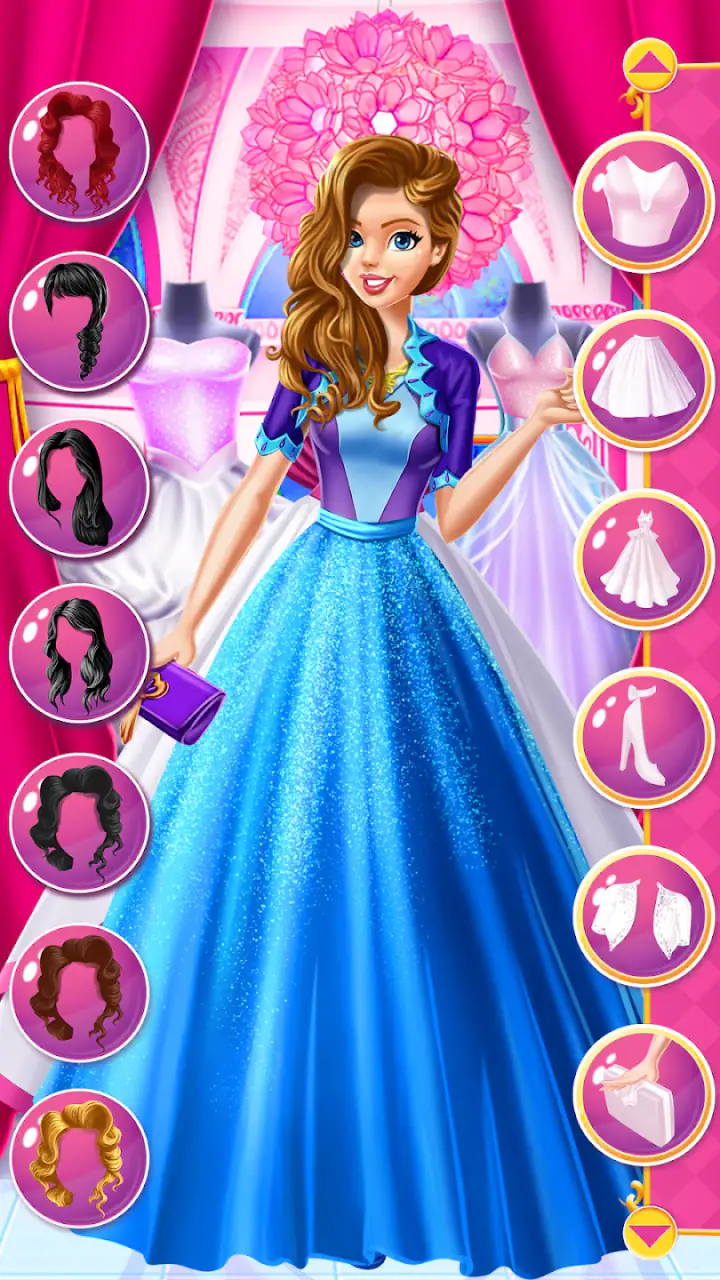
The central appeal is the immediate transformation. I can look at a princess doll, make choices about her outfit and appearance, and see the result without learning complicated rules first. That low barrier matters, especially for a child who may not yet be comfortable with games that use timers, inventories, missions, or several layered menus.
The royal theme also gives the activity a recognizable direction. Instead of styling an anonymous avatar, I am working toward a princess-like look, so dresses, accessories, and presentation feel connected to the character. That makes the app more focused than a completely open-ended wardrobe tool, while still leaving room for personal taste.
The wording around getting the job done suggests that dressing is not the only point; there is also a small sense of completion attached to each styling task. I found that useful because it gives the session a beginning and an end. I am not simply changing clothes forever with no purpose. I have a reason to finish a look, even though the experience remains light and uncomplicated.
Latest News

Uber Eats Under Pressure: What Happens When Delivery Goes Wrong

How QR & Barcode Scanner Adapts to Android and iOS Innovations

Why Waze Navigation & Live Traffic Is Your Essential Travel Companion
CapCut Mastery: Unleash Hidden Features for Pro-Level Editing
How OS Updates Enhance Roblox Adventures

Teacher Simulator: Exam Time Turns Quick Classroom Judgments into a Repetitive Loop
That simplicity is the first major strength. A young player can understand the premise quickly, and an adult can hand over the device without needing to explain an elaborate control system. The app belongs to the beauty and dress-up side of mobile entertainment, not to simulation in the serious sense. Its pleasure comes from visual choices and the finished result.
Where the app is strongest
The best part is the short creative loop. I choose an element, see how it changes the doll, compare it with the rest of the outfit, and continue until the appearance feels complete. This kind of loop is particularly suitable for a brief break after school, a quiet moment while traveling, or a child who wants an activity that does not depend on reading long instructions.
I also like that the royal setting gives children an easy starting point for imaginative play. A player can treat the doll as a princess preparing for a formal occasion, even if the app itself does not require a detailed story. That opens the door to simple storytelling outside the screen: deciding where she is going, why she needs a particular look, or which outfit feels most suitable.
Gallery
A useful tip is to decide on the overall mood before changing individual items. I get better-looking results when I first imagine whether the doll should appear elegant, cheerful, or more dramatic, then select pieces that support that idea. Randomly tapping every attractive option can produce a busy result, while a small theme makes the final character feel more intentional.
Another practical approach is to use the first attempt as a planning pass rather than trying to create the perfect look immediately. I can notice which parts compete with one another, then adjust the outfit with a clearer idea of balance. That makes the experience more engaging for children who enjoy experimenting, because an imperfect result becomes part of the process instead of a failure.
The app is also approachable because it is free to download. That makes it easier to try without treating the first session as a financial commitment. Its content rating is Everyone, which fits the gentle, accessible nature of the activity and makes it a reasonable candidate for families seeking a child-friendly dress-up title.
Its popularity gives some useful context as well. The app has passed ten million installs and holds an average rating of 3.9 from roughly sixteen thousand ratings. I would read that as evidence of broad interest rather than a guarantee that every player will enjoy it. The experience clearly reaches a large audience, but the rating also suggests that its simplicity will not satisfy everyone.
Small details that improve the way I play
One overlooked strength of this type of app is that it encourages visual comparison. I am not only asking whether a single dress looks attractive; I am judging how the clothing, character, and accessories work together. For a younger player, that can become a gentle introduction to color matching, contrast, and choosing a focal point without feeling like a lesson.
I find it helpful to avoid changing everything at once. If I alter the dress, hair, and accessories together, I cannot tell which decision improved the look. Changing one area at a time gives me a clearer sense of what each choice contributes. This is a simple workflow, but it makes the limited styling activity feel more deliberate and gives children a way to practice decision-making.
There is also a natural opportunity for shared play. A parent, sibling, or friend can suggest a theme, such as a celebration or a formal royal visit, and the player can interpret it through the doll’s appearance. That turns a solitary app into a conversation starter. I would not describe it as a multiplayer experience, but it can still support cooperative imagination when another person is nearby.
The app works best when I treat it as a small creative canvas, not as a collection game. If I expect constant unlocks, complex progression, or a large number of challenges, the experience may feel thin. If I expect a calm sequence of styling decisions, its boundaries become easier to appreciate.
The main weakness: limited depth for returning players
The same simplicity that makes the app welcoming also creates its clearest limitation. Once I understand the styling routine, the novelty can fade. There is no reason to expect the depth of a larger fashion simulator from this compact concept, so players who want long-term goals, detailed character development, or a changing narrative may find themselves repeating the same kind of activity.
This matters most for older children and adults. A child who enjoys dress-up may have fun for several sessions, but a player who wants to manage a wardrobe, build a fashion collection, or compete against other designs will probably prefer a more substantial alternative. The app is not a replacement for those experiences; it is the easier, quieter option.
I also think the presentation depends heavily on the player’s own imagination. A rich story or advanced challenge could provide motivation when the styling choices feel familiar, but here the player has to supply much of that extra meaning. That is a strength for creative children and a weakness for anyone who needs clear progression to stay interested.
Another trade-off is that a focused royal theme can feel repetitive if the player wants modern, casual, seasonal, or highly varied fashion scenarios. The theme helps the app feel coherent, but it also narrows the range of situations I can imagine within it. A broader avatar creator would be better for someone who wants to style many different kinds of characters.
The rating of 3.9 reflects that middle ground fairly well in my view. I would not treat it as a poor result, especially for a free app with a simple purpose, but I also would not present it as a universally outstanding beauty game. It is more accurate to see it as a pleasant, accessible choice with a modest ceiling.
Who should install it, and who should skip it
I would recommend it to younger children who enjoy princesses, dolls, colors, and choosing outfits. It is also suitable for parents looking for a straightforward activity that can be understood quickly. Because the content rating is Everyone, the tone is a comfortable fit for a broad family audience, though adults should still use their normal judgment about device use and screen time.
It can also work for casual players who want something undemanding. I can imagine opening it during a short wait, making a few styling decisions, and closing it without feeling that I have abandoned a complicated mission. That low commitment is valuable on mobile, where not every app needs to become a daily hobby.
I would be more cautious about recommending it to players who want realistic makeup application, detailed fashion design, or a strong sense of progression. Someone comparing it with a full avatar editor should understand that this is a lighter experience. A dedicated beauty simulator will usually offer more control over individual features, while a large dress-up game may provide more outfits, events, and reasons to return.
It is also not the right pick for someone searching for competition or social sharing as the main attraction. The pleasure here comes from making a personal design, not from proving that one player’s look is better than another’s. If rankings, challenges, or community interaction are essential, another category of app will fit better.
For families, I would suggest playing alongside a child at least once. That first shared session shows whether the child enjoys the creative choices or loses interest after the initial novelty. It also lets an adult demonstrate a useful habit: finish one coherent look before starting another. That small structure can turn quick tapping into more thoughtful play.
How it compares with familiar alternatives
Compared with a general avatar creator, this app feels more guided. The princess theme reduces the number of directions available, but it also removes the blank-page problem. A child who does not know where to begin can start with the character’s royal identity and build from there.
Compared with a full fashion-management game, it is much less demanding. There is no need to think of the experience as a long-term project with resources, schedules, or strategic choices. That makes it more accessible, but it also means there is less to master. I would choose this app for a calm styling break and a deeper alternative for sustained play.
Compared with a beauty tool designed for adults, it is clearly more playful than practical. It is not meant to teach real makeup techniques or help me plan an actual outfit. Its value is imaginative rather than functional, which is exactly why it suits children better than people seeking real-world beauty guidance.
The developer, winkypinky, has positioned this title within a recognizable collection of accessible doll-oriented experiences. In this particular app, that approach works when the player wants immediate interaction and a friendly theme. The trade-off is that the design feels aimed at quick enjoyment rather than at players who expect a highly evolving game world.
Everyday use and practical expectations
A realistic use case would be a child waiting for an appointment with a parent. The child can open the app, choose a princess look, make adjustments, and complete a small styling session without needing a long explanation. When the appointment begins, the activity can end naturally because the goal is compact rather than part of a lengthy campaign.
Another scenario is shared play between siblings. One child can choose the occasion and the other can decide on the outfit, then they can discuss whether the final appearance matches the imagined event. This gives the app more value than simply handing over a device, although the quality of that experience depends on the children creating their own rules around the styling task.
Before installing, I would ask what kind of entertainment the intended player prefers. If the answer is “choosing clothes and making pretty characters,” this is a sensible free option to try. If the answer is “building a world, solving puzzles, competing, or customizing every detail,” I would look elsewhere first.
It is worth keeping expectations realistic about the word “game.” This is closer to an interactive dress-up activity than to an adventure with substantial plot or challenge. That is not a flaw by itself. In fact, the lighter format is why it can be comfortable for a young player who might be overwhelmed by more complex games. It becomes a problem only when someone downloads it expecting a much deeper system.
Since it was released on January 14, 2017, I see it as an established older entry rather than a new release built around current mobile trends. That can be reassuring for someone who wants a familiar, uncomplicated format, but it also reinforces my advice not to expect the newest ideas in social play or advanced customization.
My final recommendation
After spending time with it, I see Dress Up Royal Princess Doll as a friendly, focused beauty app that succeeds through accessibility rather than ambition. Its best qualities are the clear royal theme, the easy styling loop, the family-oriented tone, and the freedom to experiment without pressure. It gives a young player a small space for visual creativity and can fill a short break pleasantly.
Its limitations are equally clear: the activity may become repetitive, the theme is narrow, and the depth is modest compared with larger dress-up or avatar games. I would not recommend it to someone seeking advanced beauty simulation, competitive play, or a long progression system.
For the right audience, though, those limits are not deal-breakers. A child who enjoys princess dolls can start quickly, create a look, and use imagination to add the story that the app keeps simple. My verdict is a qualified recommendation: choose it for relaxed, child-friendly dress-up play, not for a deep fashion game. At no cost and with an Everyone rating, it is easy to try, and its broad install history shows why this straightforward format continues to appeal.
FAQs for Dress Up Royal Princess Doll
What is Dress Up Royal Princess Doll about?
Dress Up Royal Princess Doll is a creative dress-up game where players can design and style their own royal princess. The game offers a wide range of outfits, accessories, and hairstyles, allowing users to unleash their creativity and showcase their fashion sense. It's perfect for those who enjoy fashion and design.
Is Dress Up Royal Princess Doll suitable for children?
Yes, Dress Up Royal Princess Doll is suitable for children, particularly those who enjoy dress-up and fashion games. The app is designed to be user-friendly and engaging, providing a safe and fun environment for kids to express their creativity. Parental guidance is recommended to monitor in-app purchases.
Does Dress Up Royal Princess Doll require an internet connection?
Dress Up Royal Princess Doll can be played offline, making it convenient for users who want to enjoy the game without an internet connection. However, some features, such as purchasing additional outfits or accessing new updates, may require an internet connection.
Are there in-app purchases in Dress Up Royal Princess Doll?
Yes, Dress Up Royal Princess Doll offers in-app purchases. These typically include additional outfits, accessories, and special features that enhance the gaming experience. While these are optional, they can provide more variety and customization options for your princess. Users should be aware of potential costs.
How often are new updates or features added to Dress Up Royal Princess Doll?
The developers regularly update Dress Up Royal Princess Doll with new features, outfits, and accessories to keep the game fresh and engaging. These updates are often based on user feedback and seasonal events, ensuring players have access to the latest trends and styles.
Pros
- Variety of outfits and accessories.
- User-friendly interface for easy navigation.
- Engaging and creative gameplay.
- Frequent updates with new content.
- Offline mode available for travel play.
Cons
- In-app purchases can be pricey.
- Ads may interrupt gameplay.
- Limited free content without purchases.
- Graphics could be more detailed.
- No multiplayer or social features.


